
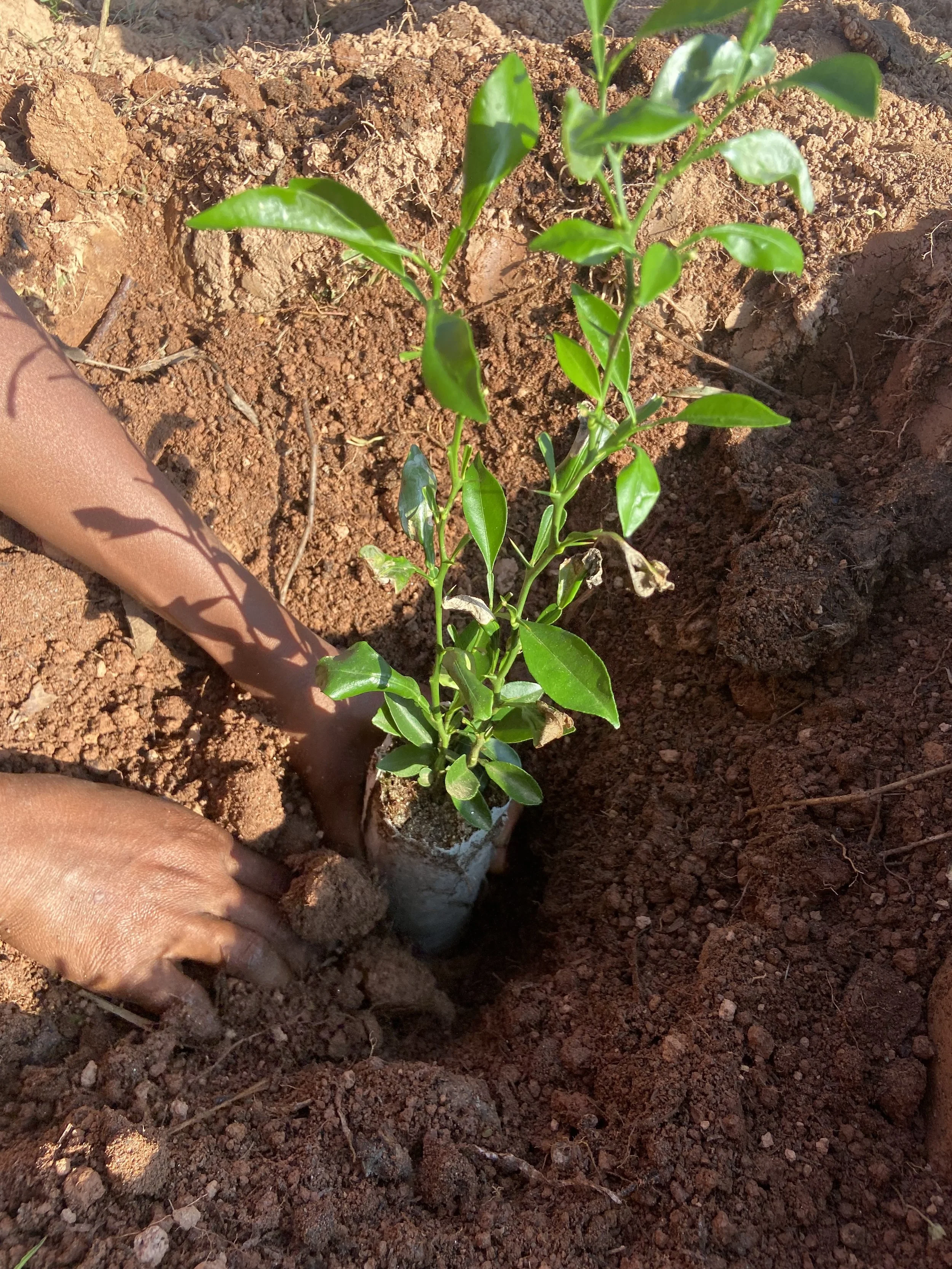
For every new system we build, we now set out to grow 1,000 trees around key watersheds, to protect and replenish the water cycle.
In our last two updates, we shared the progress on our newest Beyond Water systems and how communities are choosing to run their own .
But clean water access isn't just about what comes out of the tap. Sustainable water also depends on the health of the forests, which is why watershed protection through our TreeMad programme runs alongside every new water system we install, and why management conversations with communities cover tree-growing and water-source protection just as much as pipes and panels.
Ampitambe: an observer's knowledge
In Ampitambe, Ranirina — the Vice-President of the water maintenance committee who keeps watch over the solar panels every night — has been sharing his own observations with the team. Asked whether people in the village enjoy planting trees, he said:
"As you can see, there are mango, loquat, and lychee trees near the borehole. However, we can plant other species as well, especially fruit trees, because they are appreciated by the community."
Asked which trees help retain water in the ground, he replied: "I am an observer. I have noticed that, for example, when we plant orange trees, the soil inevitably becomes dry. Around jackfruit trees, the soil is moist. But in my opinion, banana trees contribute the most to water retention. Around banana plants, the soil is moist, dark, and rich in water."
Talking about his own trees, Ranirina added, “I have approximately ten trees of different species, including banana trees, orange trees, loquat trees, peach trees and coffee plants. Bananas are very nutritious, they can be cooked and are particularly appreciated by children. They can also be sold and provide an additional source of income.
Personally, I believe that people in our community would be particularly interested in planting coffee trees, especially since some people have already bought coffee from me.”
Our team also completed essential groundwater assessments: the watershed feeding Ampitambe's system has been clearly mapped, running from the hill below the system up to the borehole itself. The catch is that this land is farmed, split between three landowners, Ranirina being one of them, so what gets planted, and when, depends on reaching agreement between all of them.
Ankazopotaka: eager to grow trees
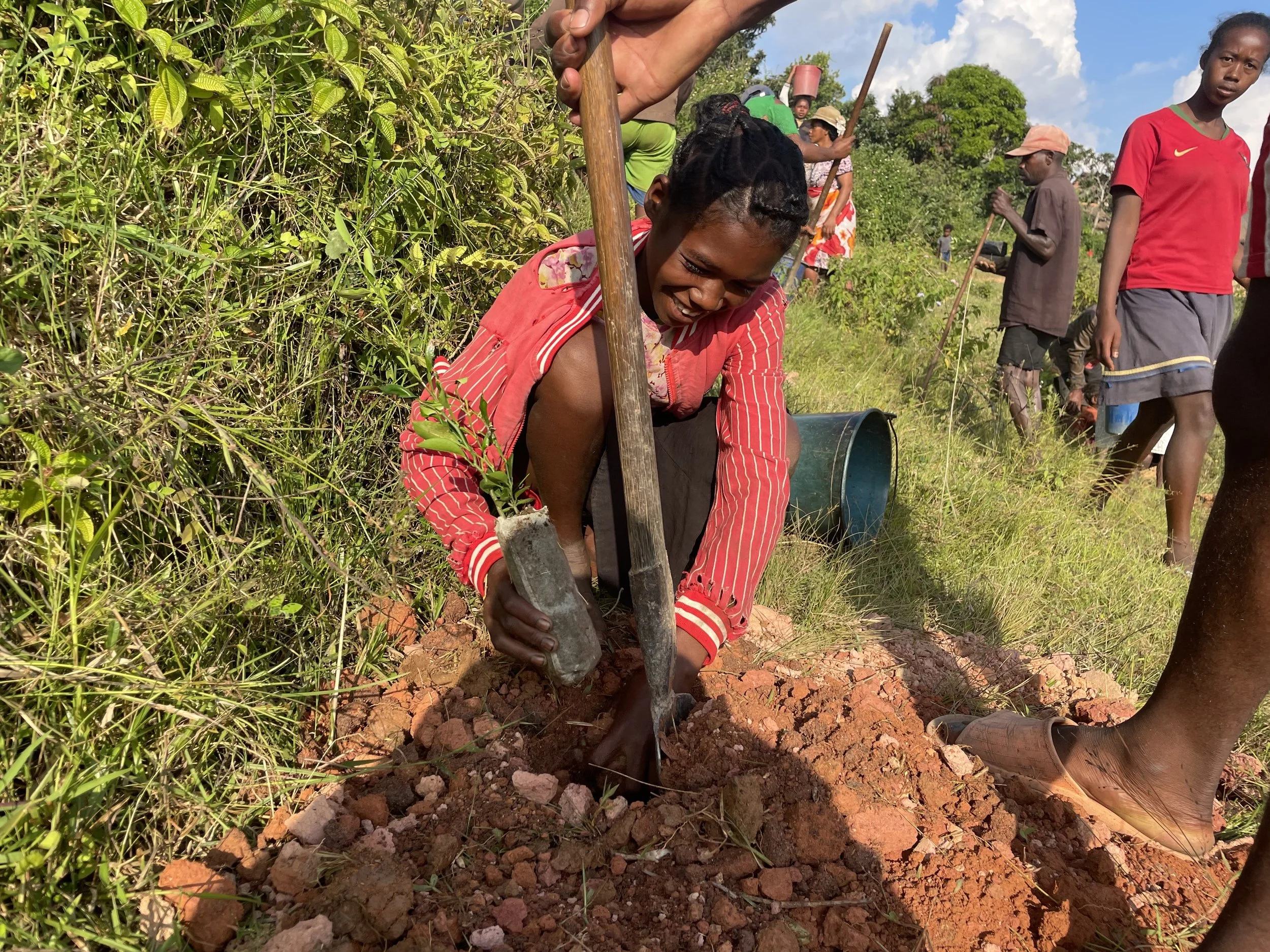
In Ankazopotaka, where a new hand-pumped borehole was inaugurated on 1 September, Rakotozafy, the maintenance committee’s president, has spent close to 20 years encouraging people in the area to plant fruit trees. And for the first time, thanks to the nearby and reliable water source, he’s confident it’s actually going to stick.
He leads by example, with around 30 fruit trees growing around his home, from mango and lychee to avocado and banana.
“Trees aren’t just food for us. They protect us from strong winds and cyclones, they clean the air, and make the village more beautiful. That’s why we need to plant all kinds of trees and keep reforesting the area. If we plant today, we’ll get much more than fruit in the years to come. One day I hope these trees will give us our own timber for carpentry and tools, so we can use what grows here instead of relying on other materials.”
Mrs Esther, the committee’s Vice-President, whom you heard from in our recent update, has her own wish: avocado trees around the borehole. She worries that children might damage the crops if other fruit trees are planted nearby, and a tough-skinned avocado is a lot less fun to pinch than a juicy lychee.
Amboaikely: mapping out the present and future
Meanwhile in Amboaikely, a participatory community mapping session paired with watershed protection action planning saw community members, mostly women, sketch out their village and its water system by hand, and agree on banana, lychee and mango as the trees to prioritise planting around the water source.
People are choosing, from their own knowledge and preferences, what gets planted around the water they depend on. Fruit trees for food and income in the villages, and native species mostly in the forest and on designated community reforestation sites.
Our TreeMad team is also working hard with the community in Ambatolahy to raise thousands of strong seedlings ahead of the next planting season.
Up Next
A follow-up meeting in Amboaikely is still ahead, and the team is working toward landowner agreements in both Ampitambe and Ankazopotaka before reforestation can move from conversation to planting.
More to come!
