
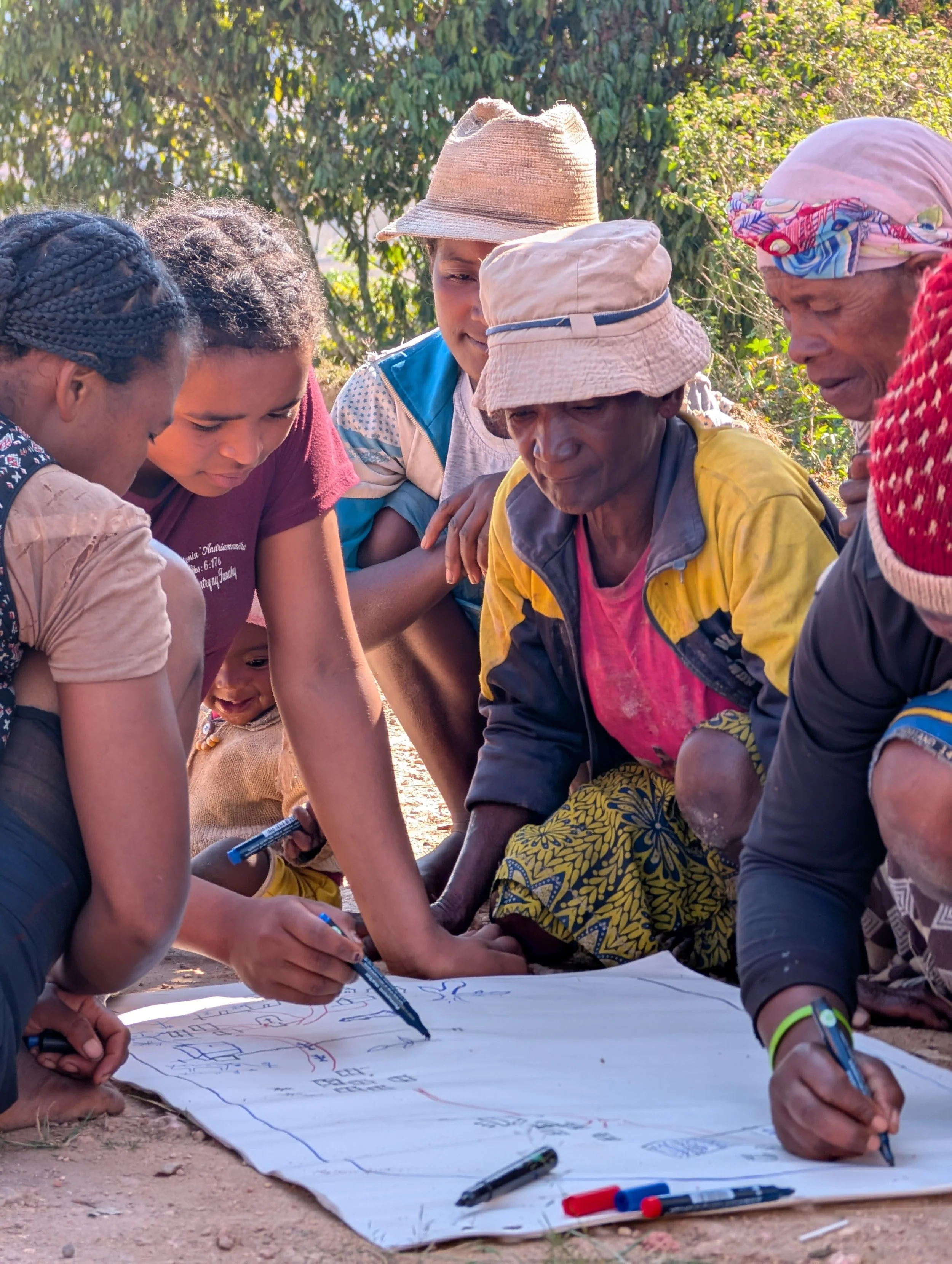
Image: Community mapping session in Amboaikely
Recently we shared how the two new solar-powered systems in Ampitambe and Itaolana took shape over the summer, and how the hand-pumped borehole in Ankazopotaka went from construction to daily use.
But infrastructure is only part of the story.
Just as important is how communities will look after it for years to come.
Back in August, a community meeting in Ampitambe was held to decide how the new infrastructure would be managed long after construction ended. The outcome: a dedicated office, set up specifically for the local water maintenance committee that will look after the system's long-term upkeep.
In nearby Soafahanolo, a hamlet in Ampitambe, the community successfully agreed on a monthly contribution model for its public tap: 1,000 Ariary a month per tap, plus a further 1,000 Ariary a month toward the solar panels and major equipment, recognising that the solar panels are by far the most expensive part of the system.
That same two-part model has since been adapted at one of the Itaolana system tap stands in Todiantsoa. The 11 households using this tap have already drafted their own rules and sanctions for how it should be used, and decided a second fence is needed for protection.
At one of Ampitambe's tap stands, used by just four households, the group decided to increase their contributions — adding a payment every Monday on top of their regular monthly contributions, to build up their fund for future repairs — and the women have taken the initiative to start planting flowers around the tap stand, to improve cleanliness and to beautify the surroundings. Our team has offered support to develop the idea further, with a small decorative garden around the water point in mind.
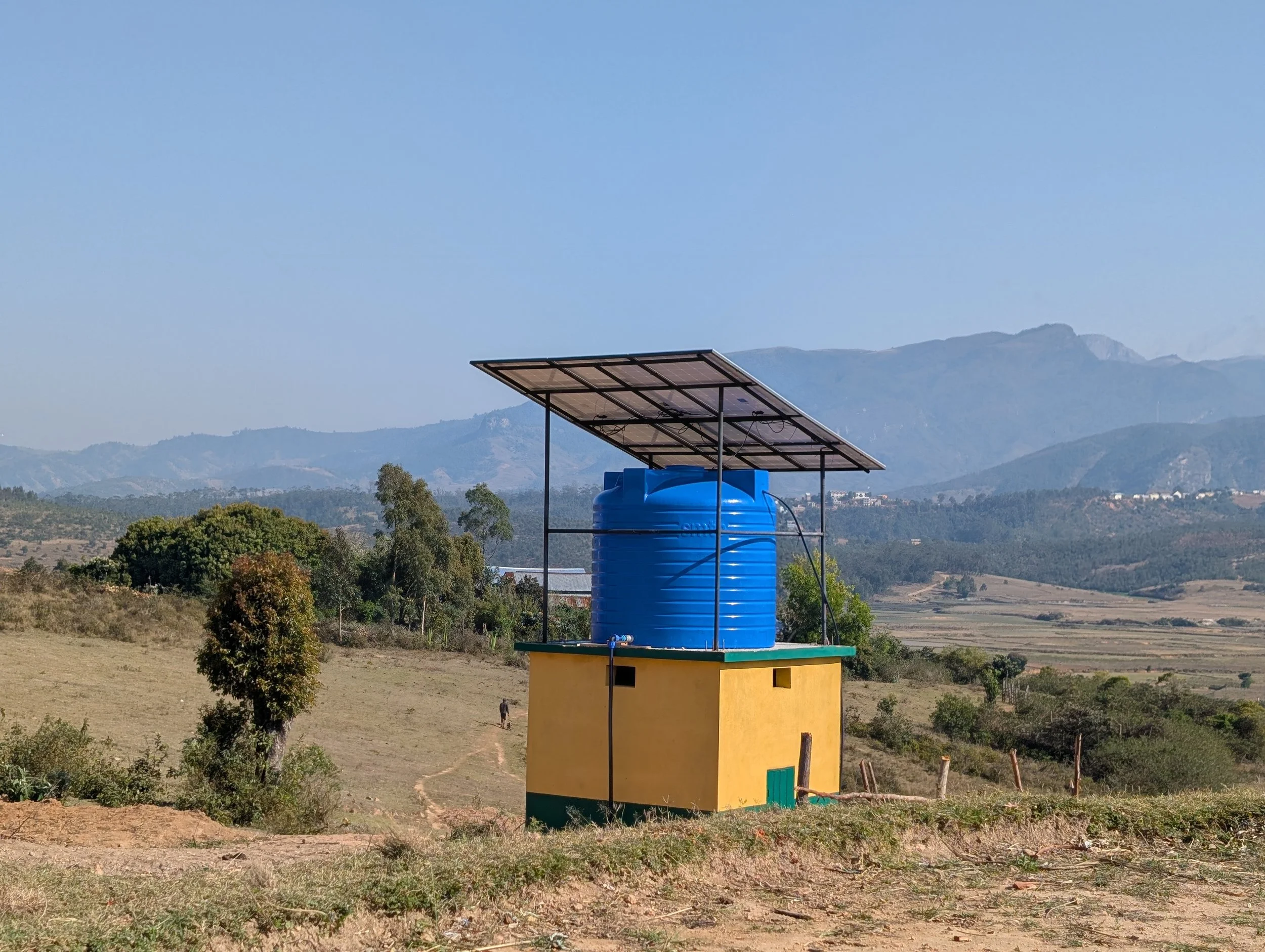
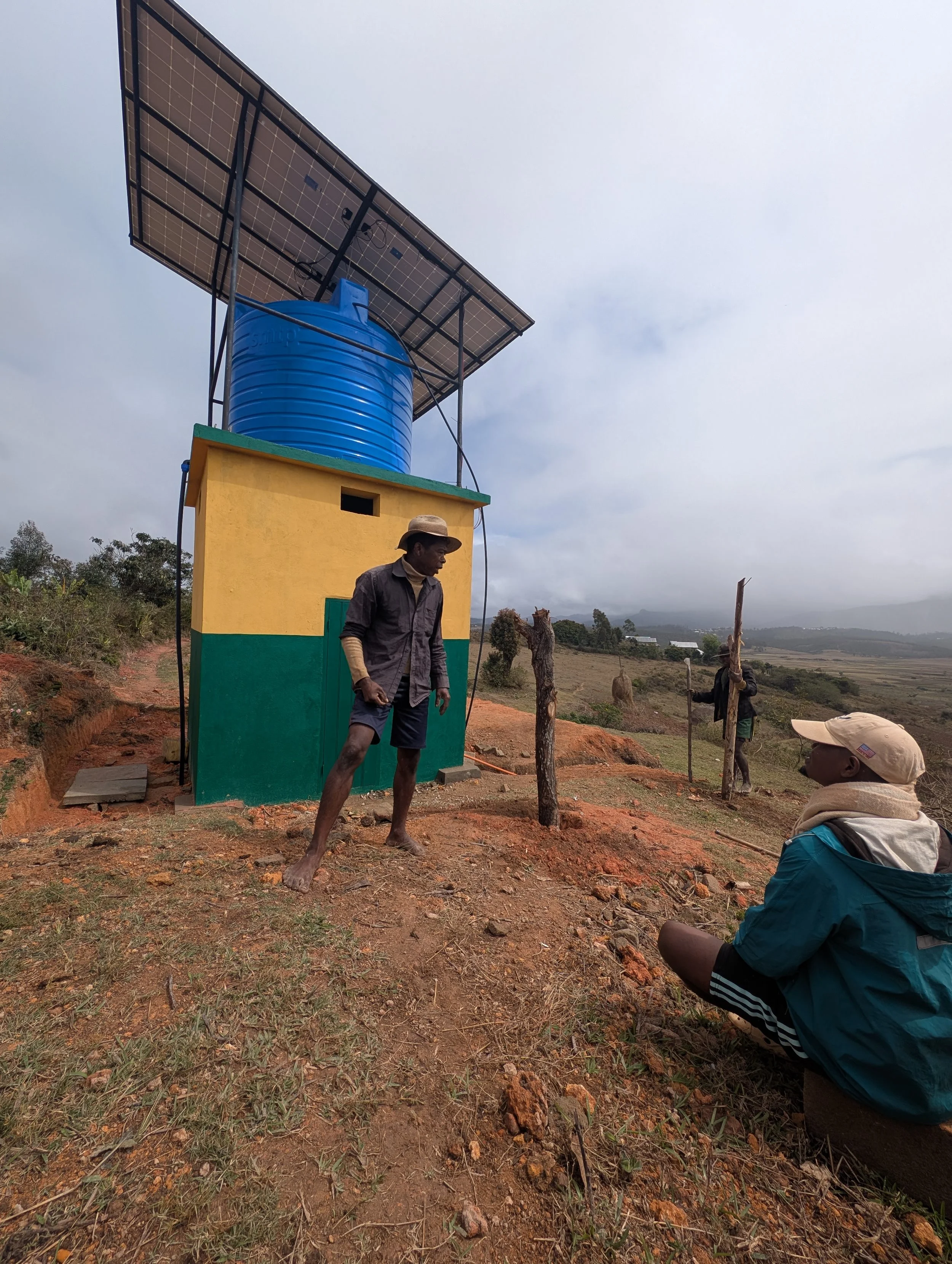
Meanwhile Ranirina, Vice-President of Ampitambe’s water maintenance committee and key holder for the storage facility, has taken his own initiative to protect the new water tower. Together with his son, he decided to build a fence around the infrastructure to protect it from unwanted access and potential damage. His main concern is the security of the solar panels and he told us that he keeps watch over them himself every single night.
No two villages are managing their new water sources the same way: some are setting up their own committees at village level, others are choosing to manage jointly across two hamlets.
With Beyond Water, our team is now also starting to document this participatory process in detail, building a profile for each village that captures its situation before the infrastructure arrived, its community relationships, its water history and its tree-growing history. A few months after each system is commissioned, the plan is to return and run participatory meetings: sitting down with communities and discussing what has changed so far, so that the communities themselves start measuring the impact.
In Ankazopotaka, that has already begun: in our last update, Mrs Esther, Vice-President of the borehole's water maintenance committee, shared the changes she's seen in her village, only one month after the official inauguration.
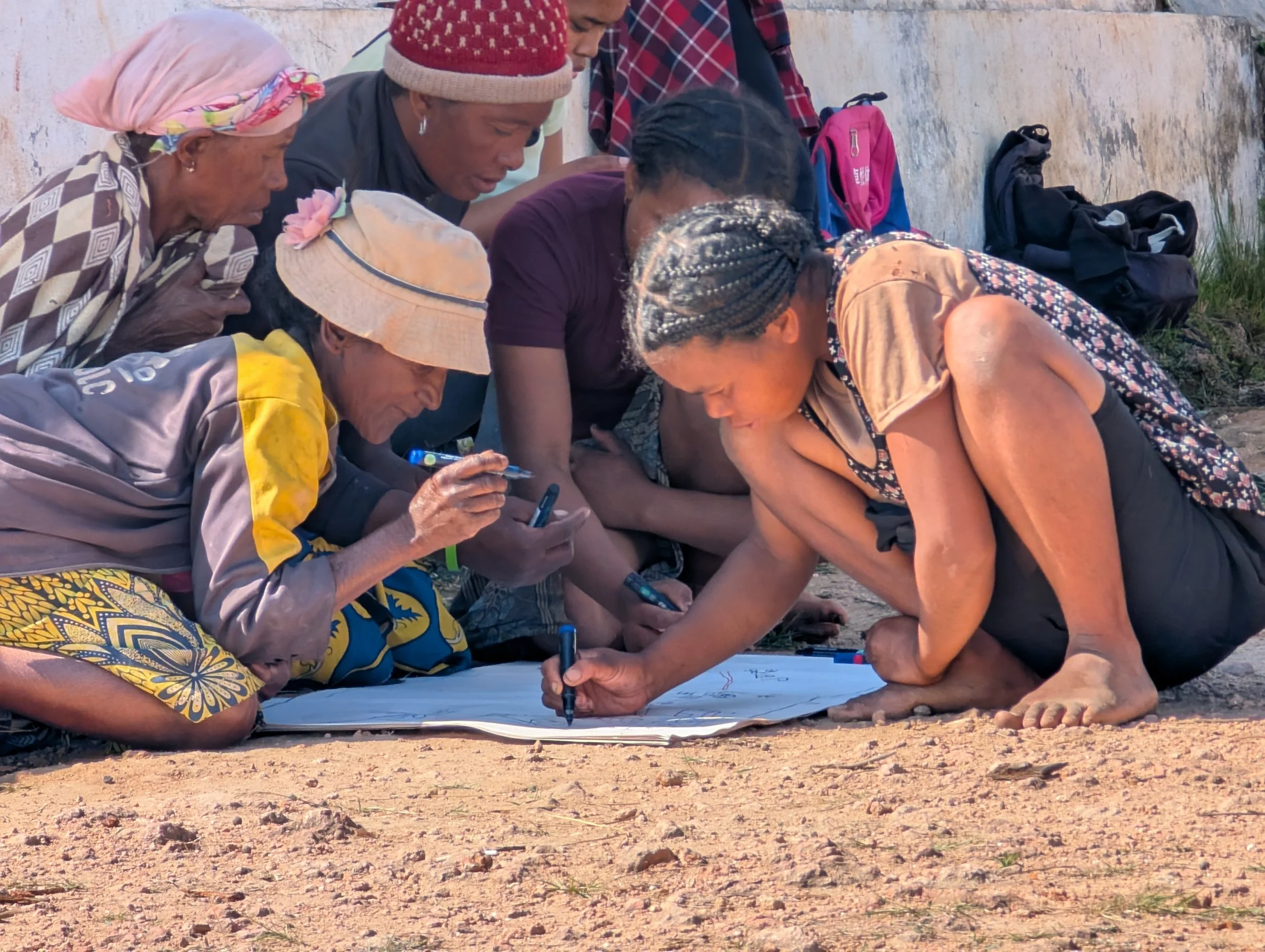
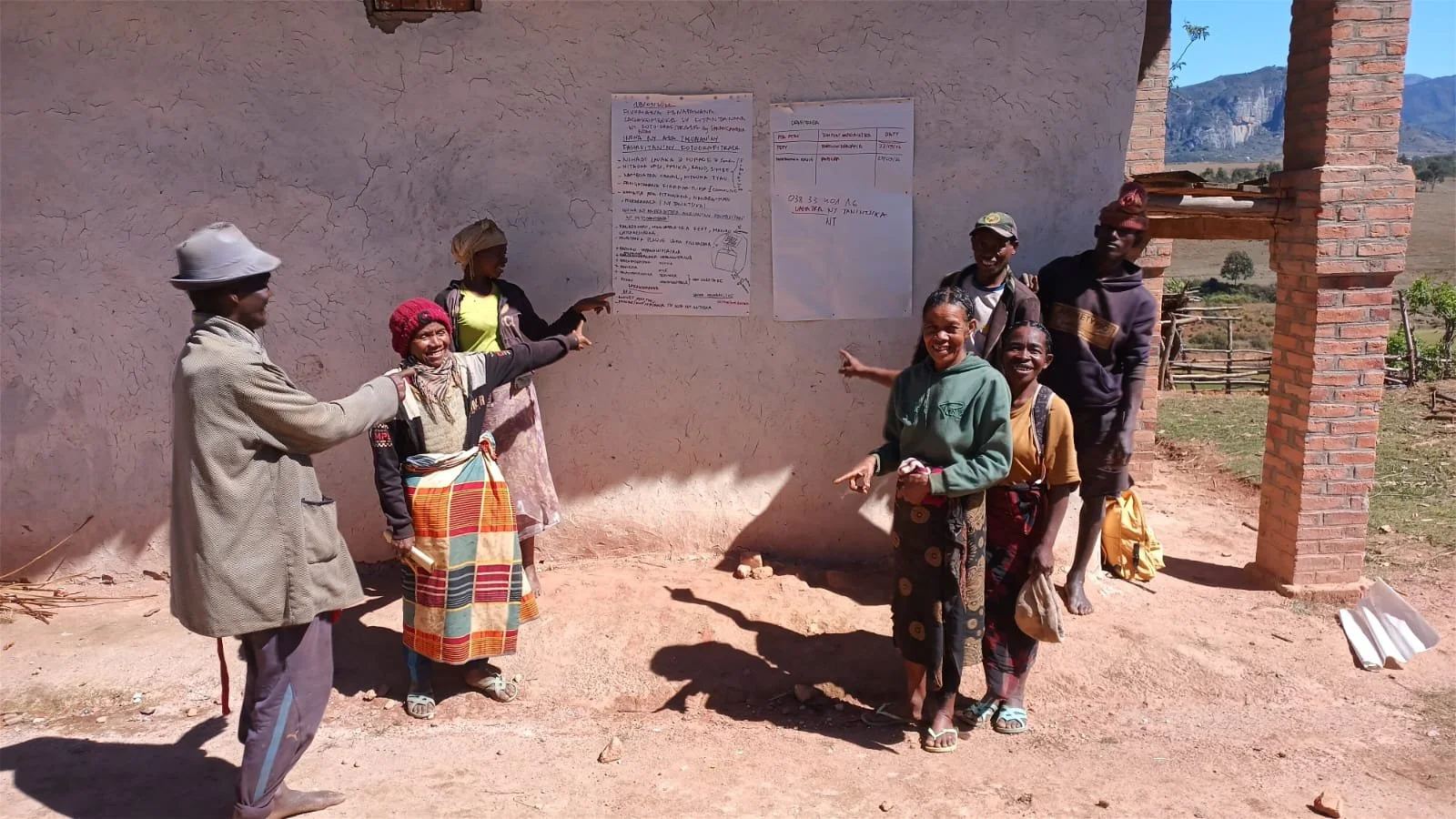
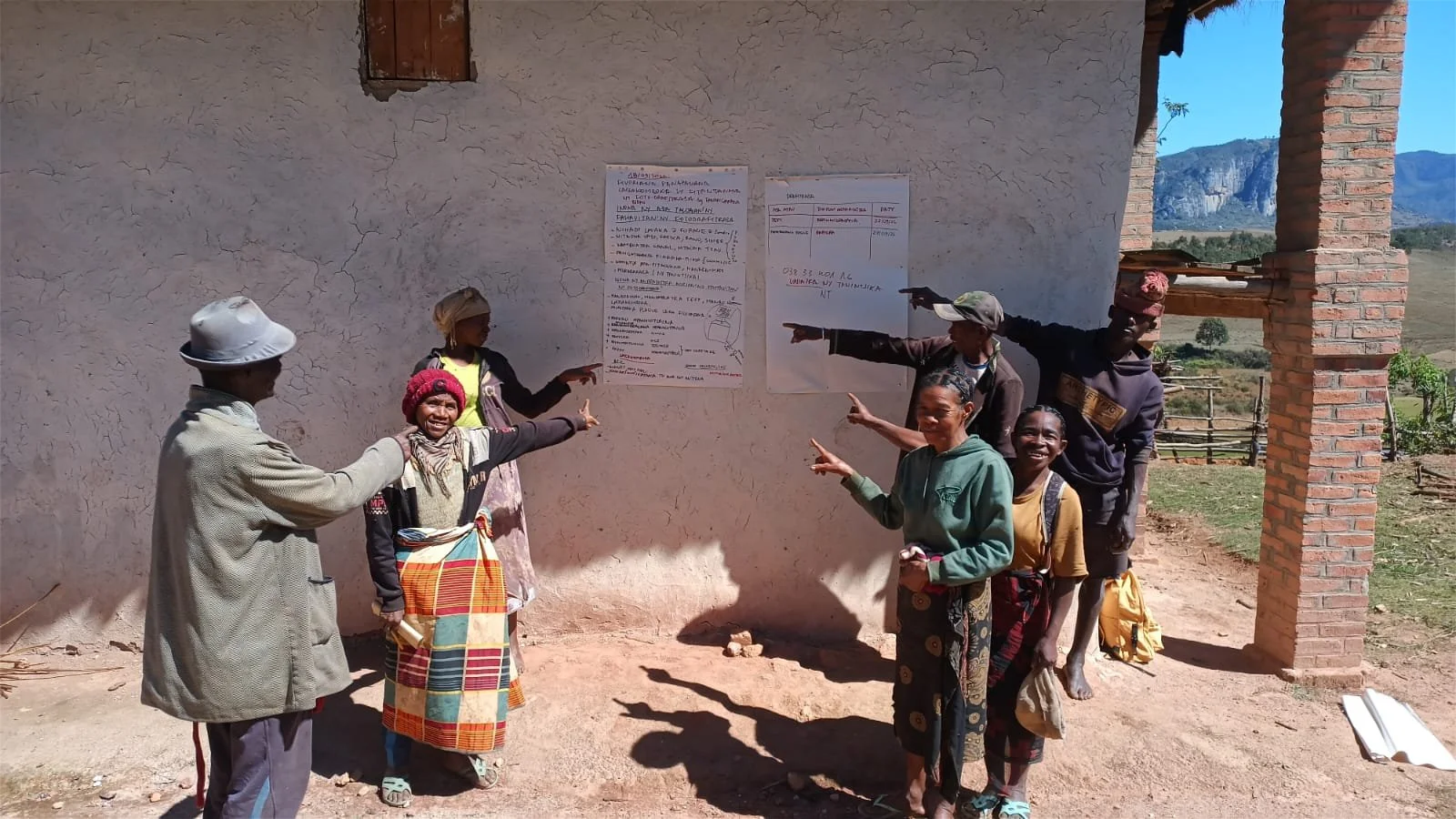
Involving communities in decisions from the get go — choosing tap locations, agreeing contribution levels, planning pipe routes and more — doesn’t just strengthen collaboration, motivation and buy-in. It also means we can respond more accurately to what communities actually need, want and prioritise: adapting construction timing around the harvest season, for instance, or letting each community choose which types of trees get planted rather than deciding for them.
Our community partners are also, increasingly, putting regulations in place themselves. Contribution levels, fencing and sanctions for damaging infrastructure are being decided locally, not handed down — like the 500,000 Ariary sanction agreed by the 10 households in Ankazopotaka. One community is even choosing to pay more into its maintenance fund than originally suggested by us, because they want to make sure they can fund their own repairs in the future.
If all continues to go well, these new systems will keep serving their communities for decades to come, just like the borehole built in Andranovakaka in 2009, still so well looked after by its community that its maintenance fund now holds over 2,000,000 Ariary.
