
A little girl gently presses a small seedling into a pot filled with soil. "I love planting trees. I don't do it because I'm afraid of being punished at school if I don't plant one. I do it because it makes me happy to see it, still small, sprouting and growing taller… I love it like my little brother or sister."
That is the first scene of Ny Ala No Aina (The Forest Is Life), a theatre play we put together with the support of the Lemur Conservation Network.
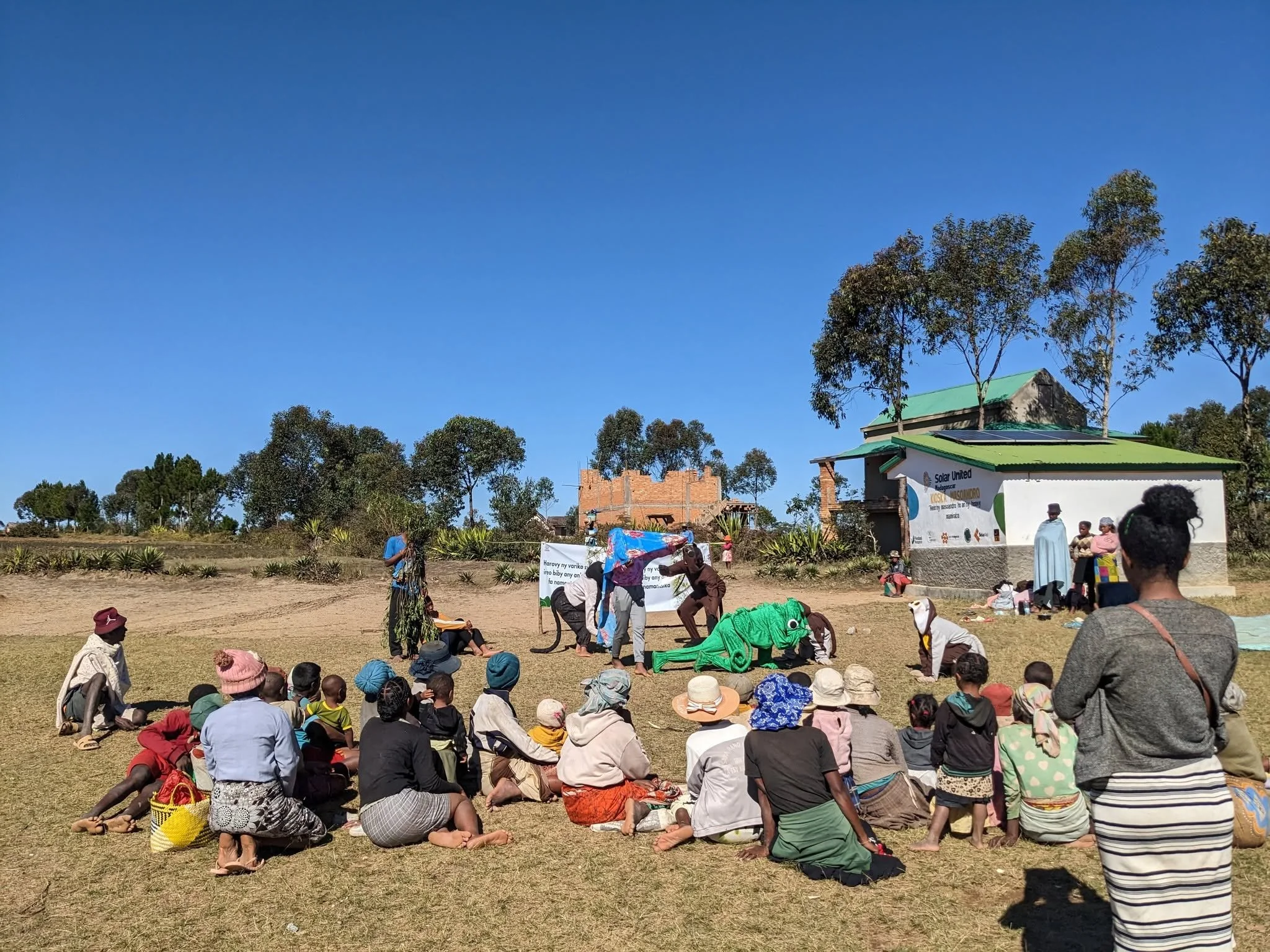
Between July and August 2026, a group of young people from Ambohimahamasina, cast through our Youth Centre, performed the play 30 times in villages across three communes and a staggering 3,181 people came to watch. Three of the performances even took place inside the forest itself.
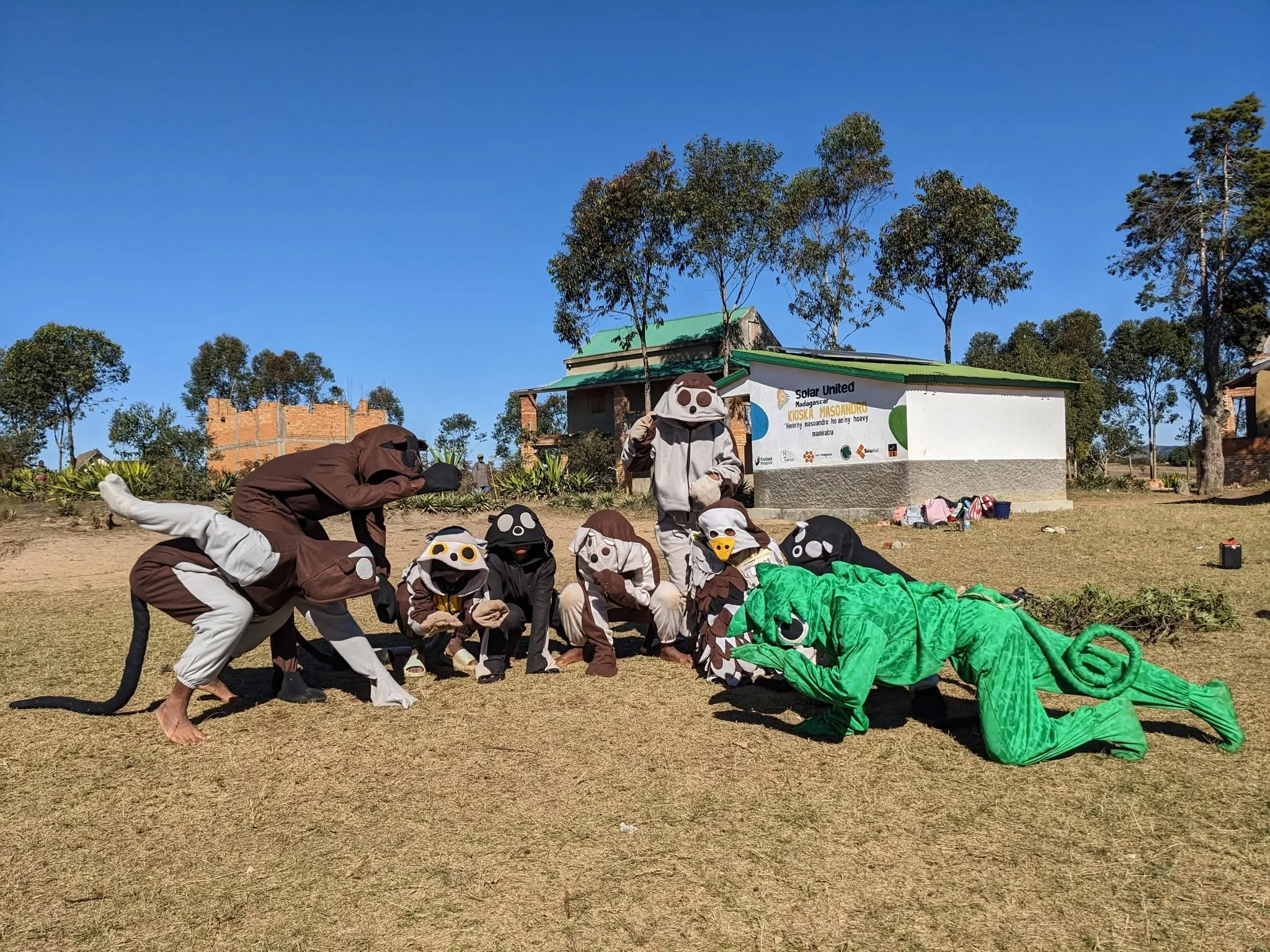
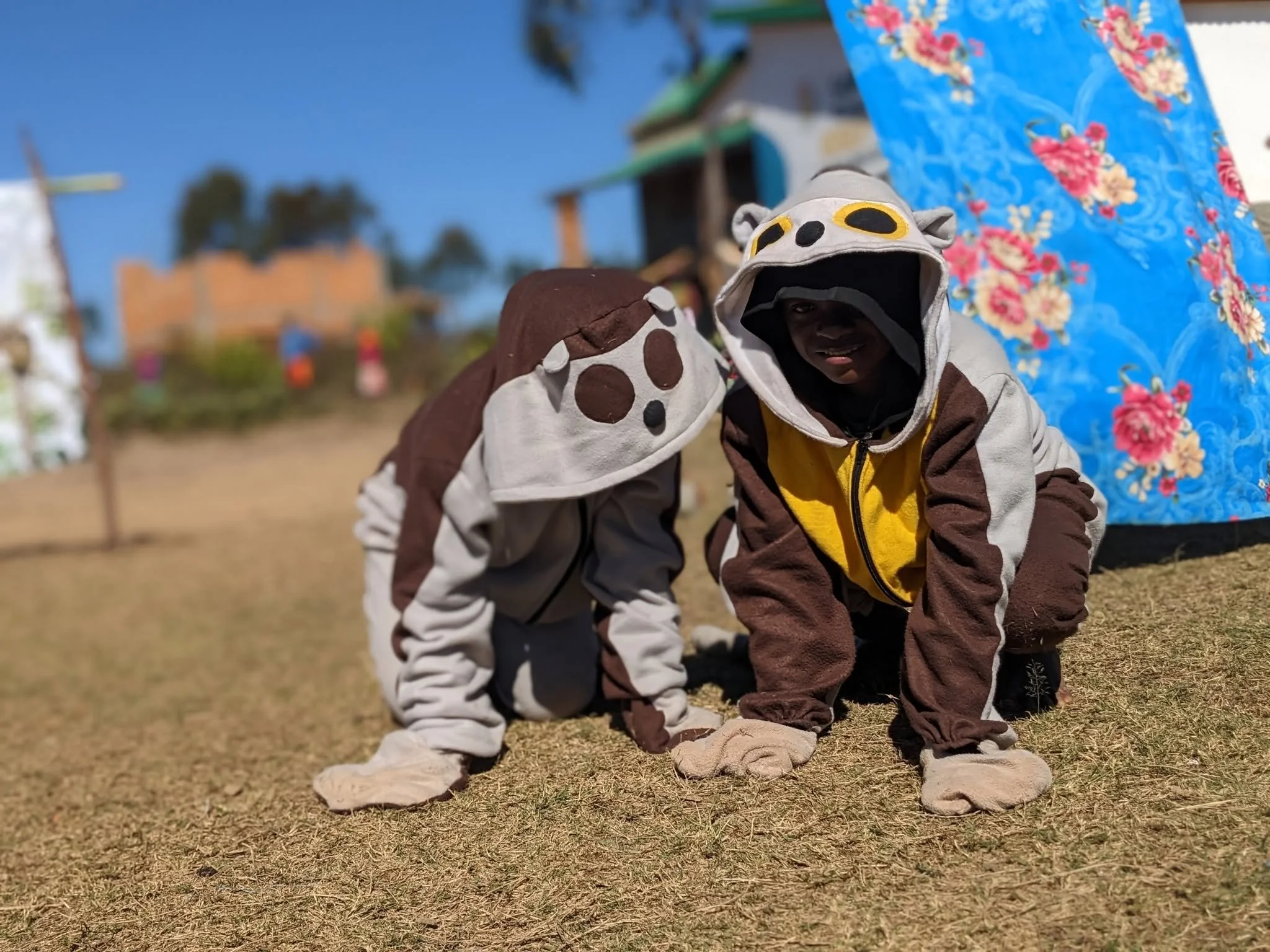
Seven lemurs, a chameleon and a family
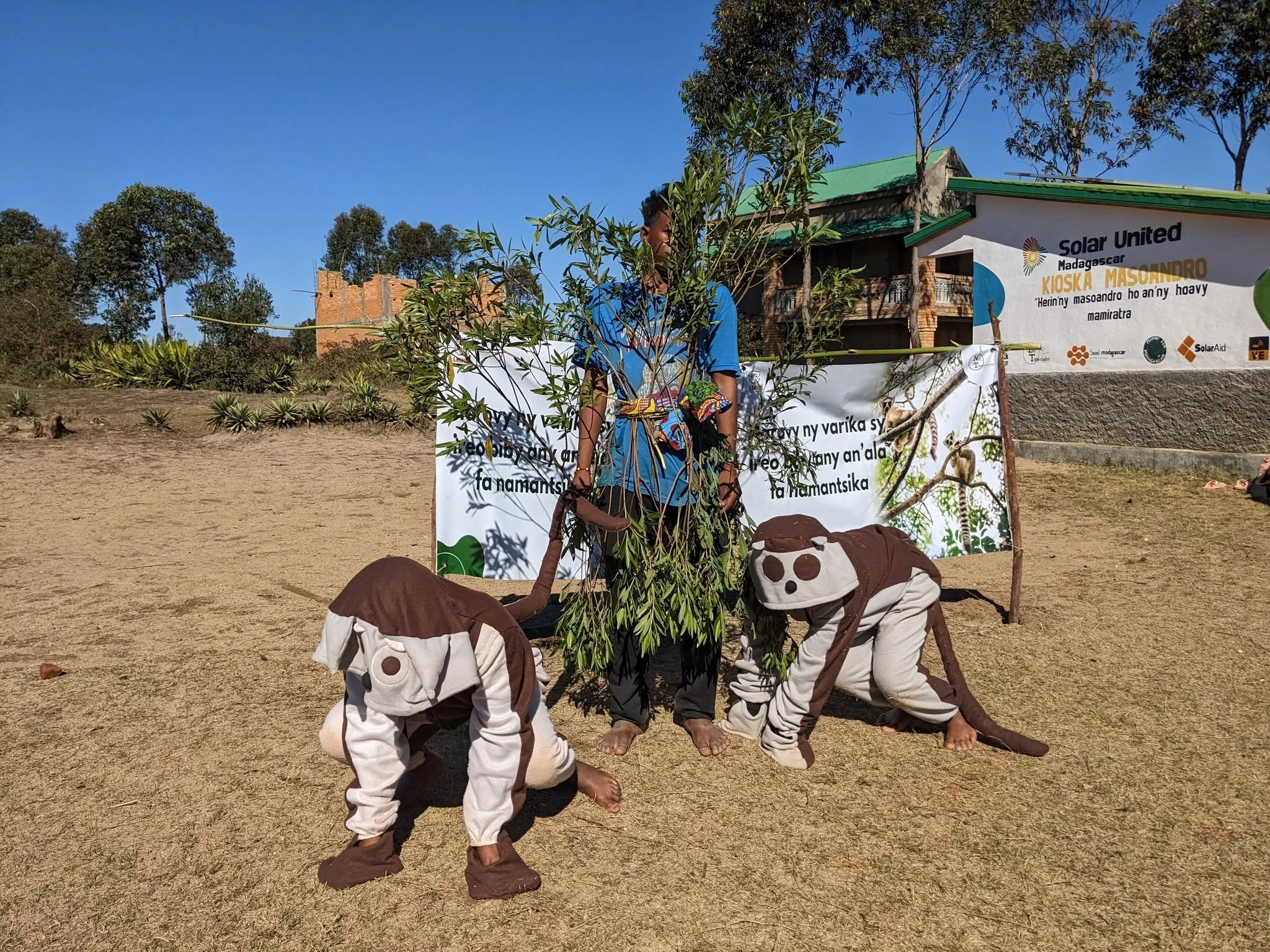
In the play, the forest and the river are characters in their own right, that depend on each other. In and around them live seven lemurs, a slow but wise chameleon, and a village family.
The lemurs get the first laugh. A male reaches for food and a female smacks his hand away: "Females first, then males! Do you think you're a human or something?" It's a lighthearted start to the play, and an accurate one at that: in most lemur species, females are dominant over males and get the first pick of food.
Then the story turns. The father of the recently introduced family cuts down trees and hunts to be able to provide for his wife and child. But the play never makes him the villain, as many people in the audience will know his situation intimately.
The forest burns, the lemurs flee the fire, and only a few survive. Eventually the consequences reach the village too. Without the forest, the springs dry up and the fields stop producing harvests. And when Koto, the family's child, falls sick, there are no medicinal herbs left to gather from the forest.
Having learned their lesson, everyone comes together in the end, and the whole village plants trees side by side.
Then the whole cast chants in unison: "The forest is life! Protect the environment! For today's generation and tomorrow's!"

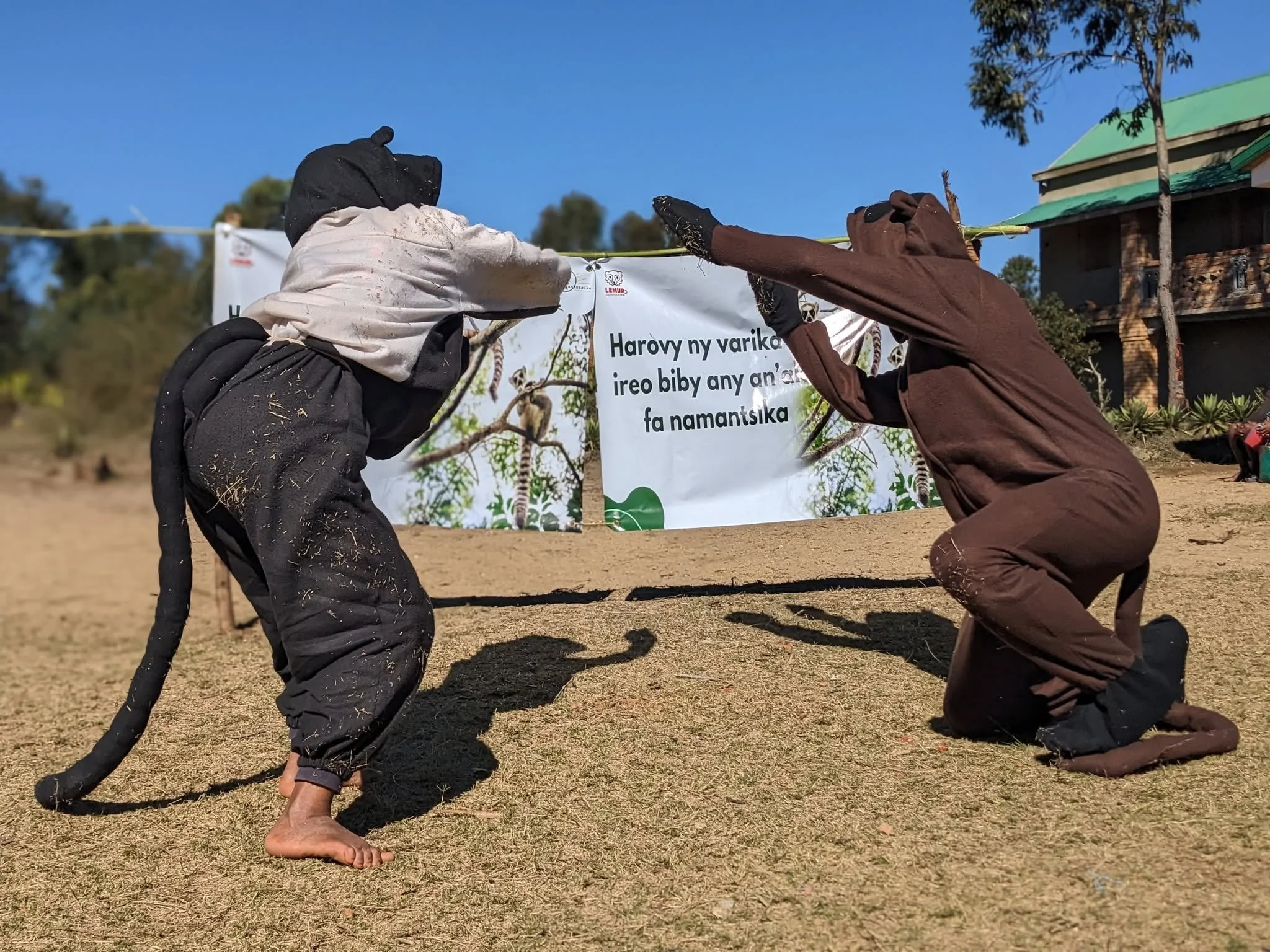
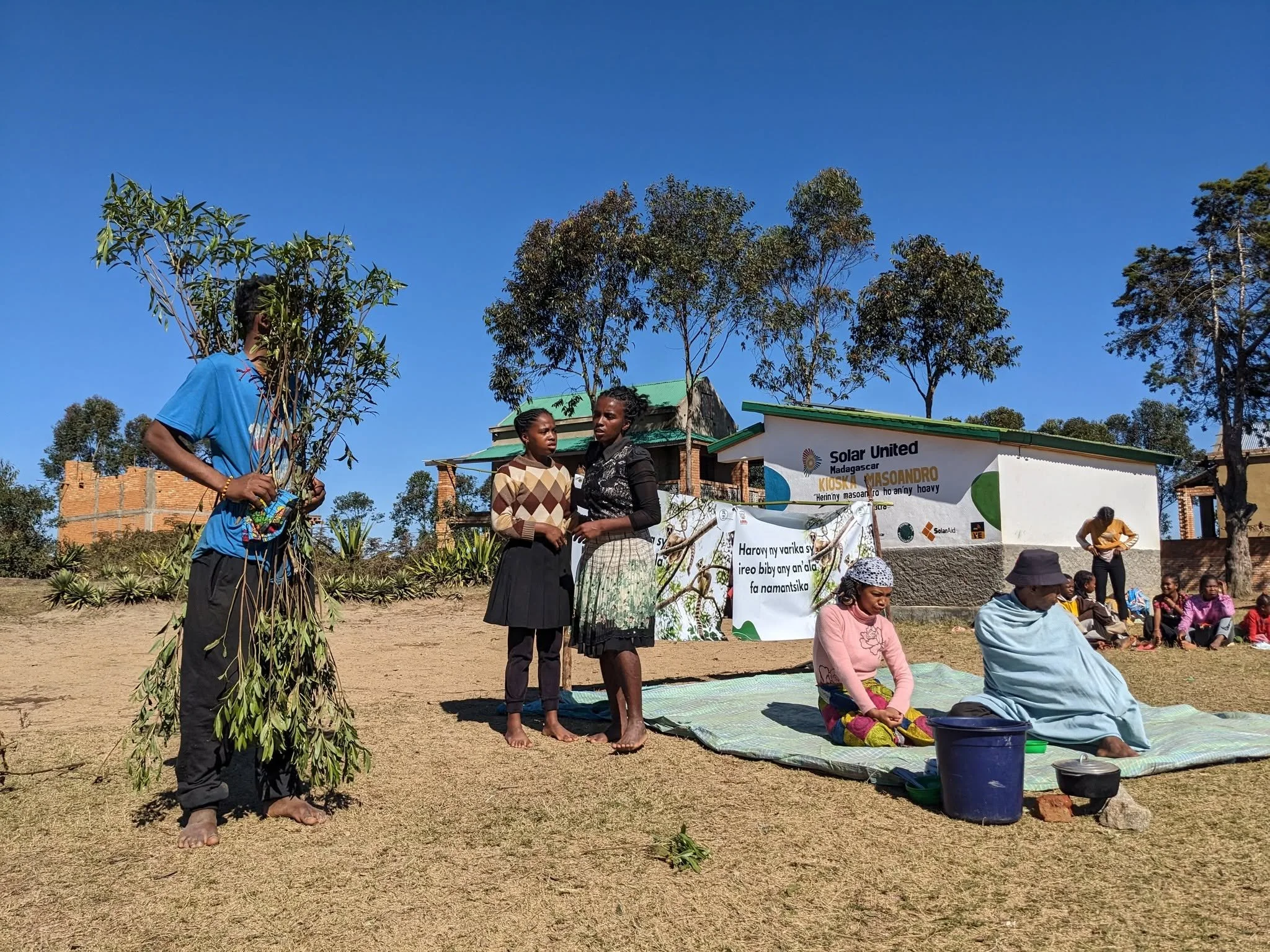
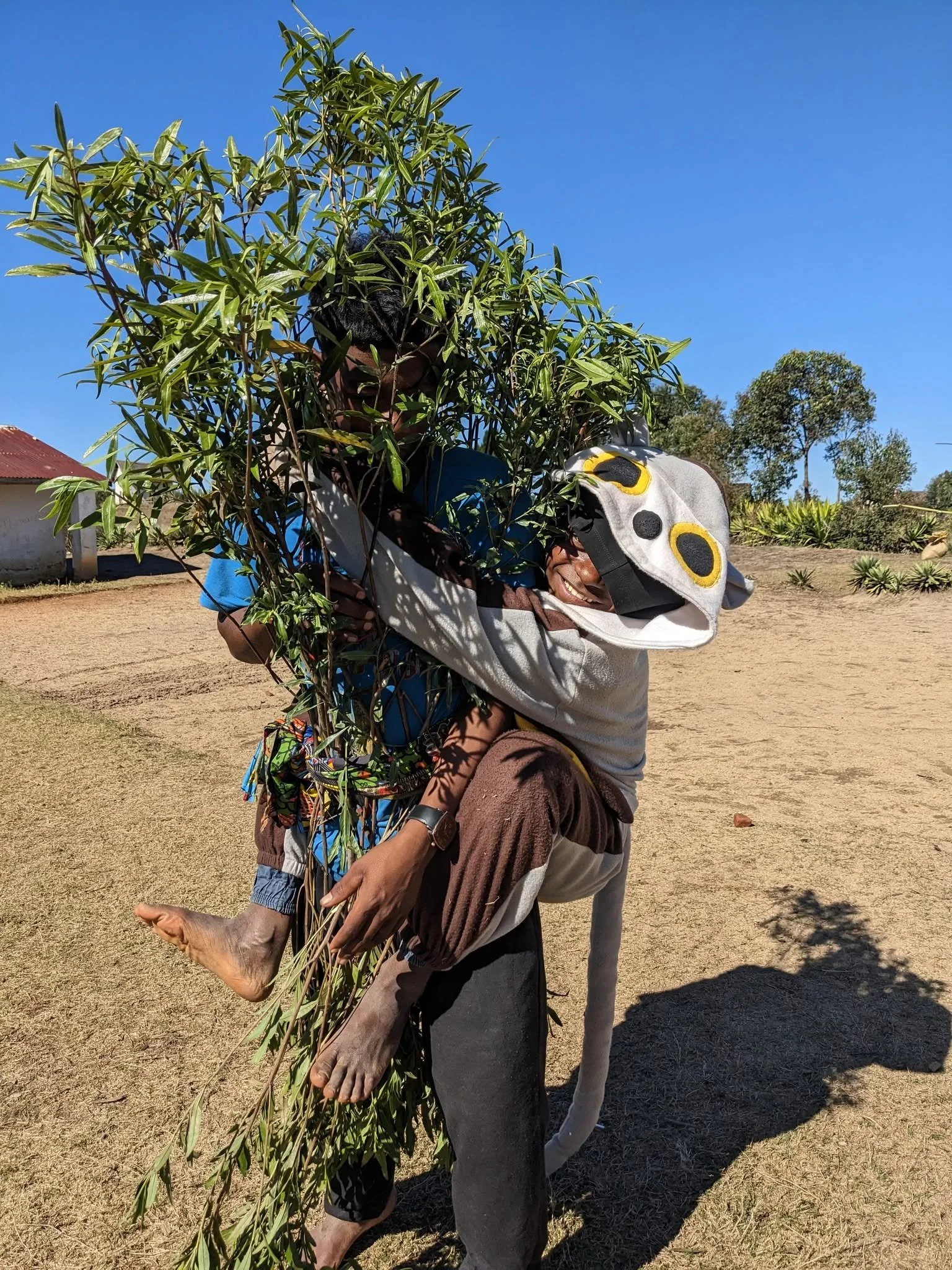
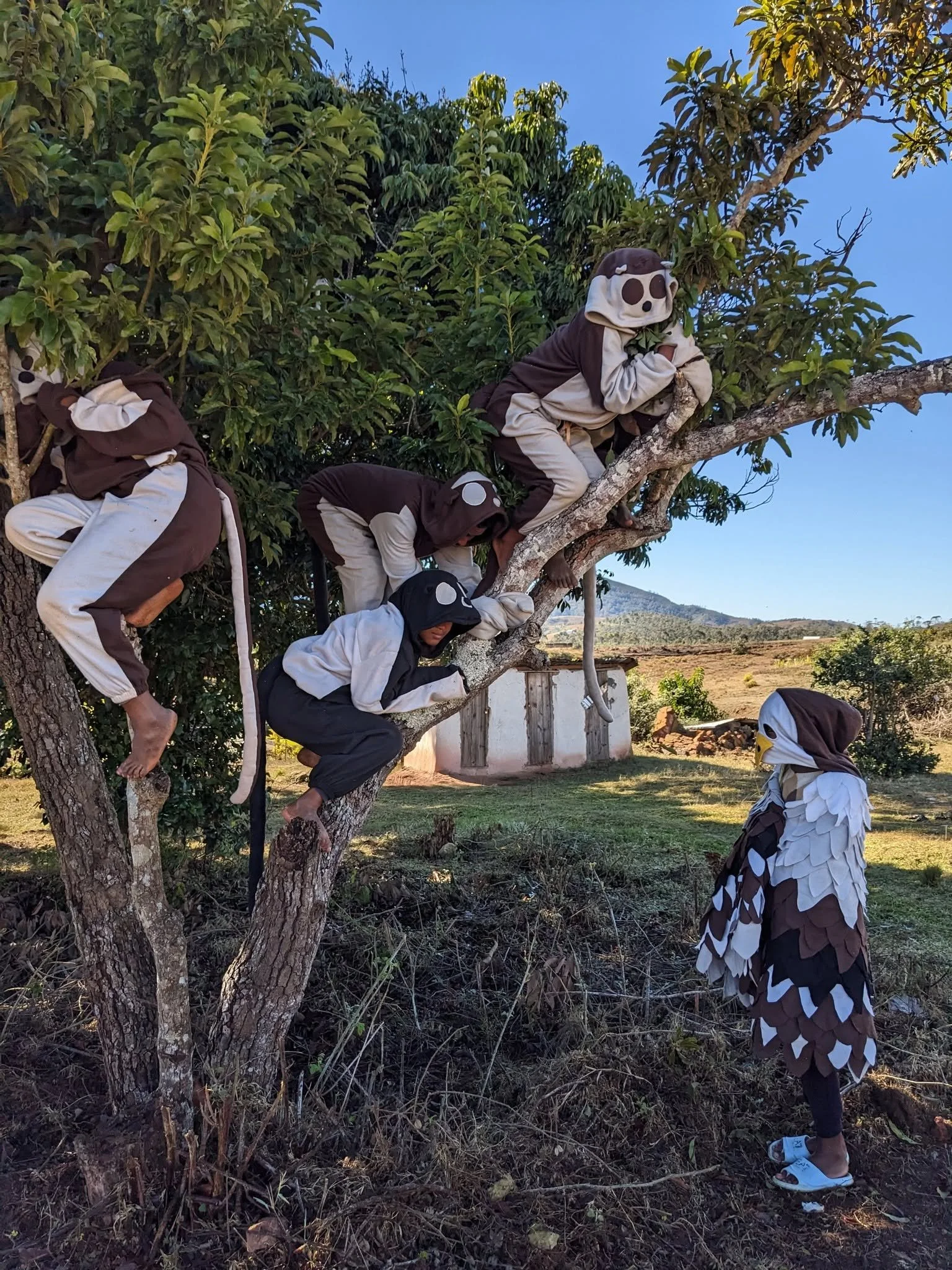
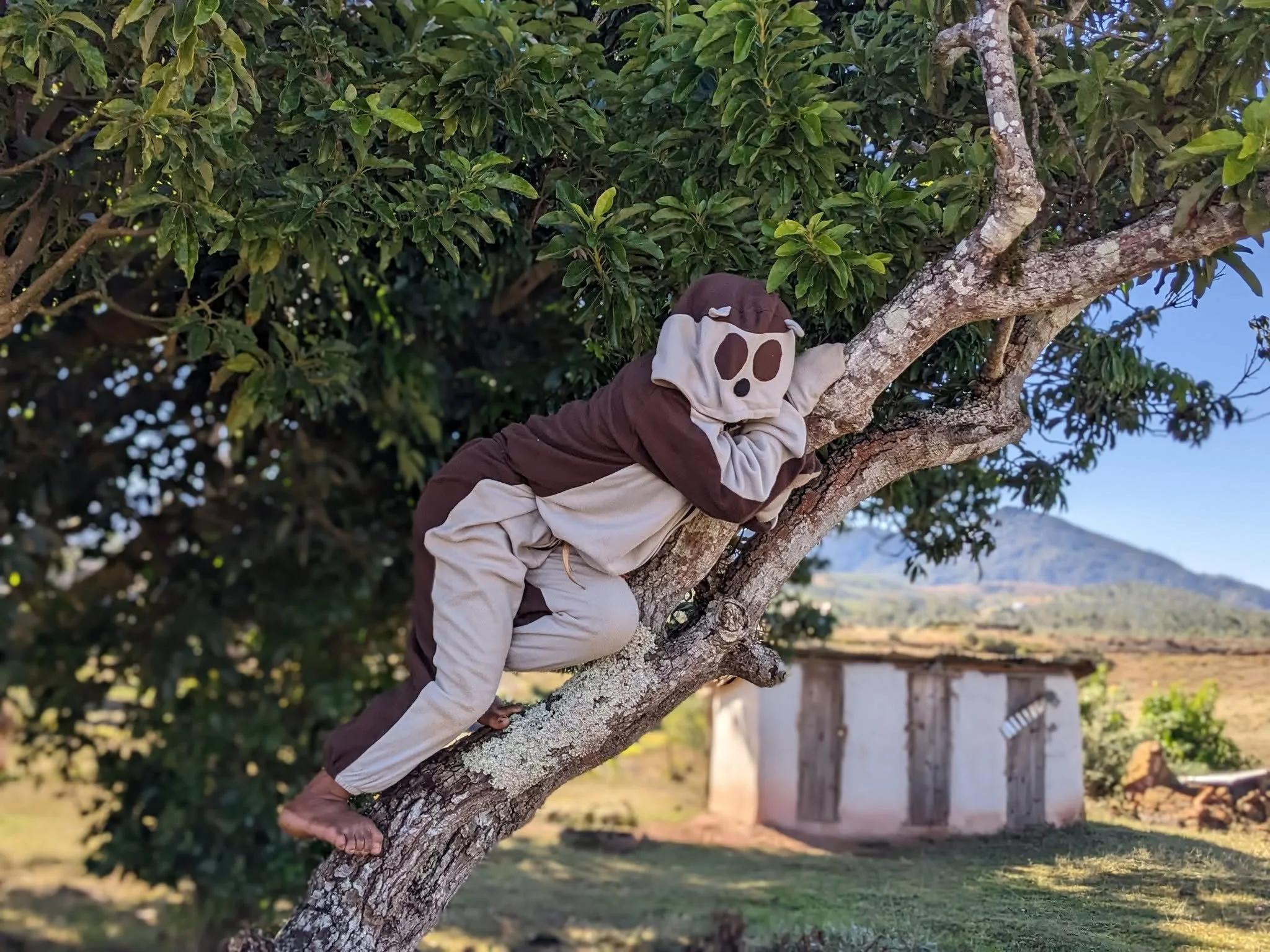
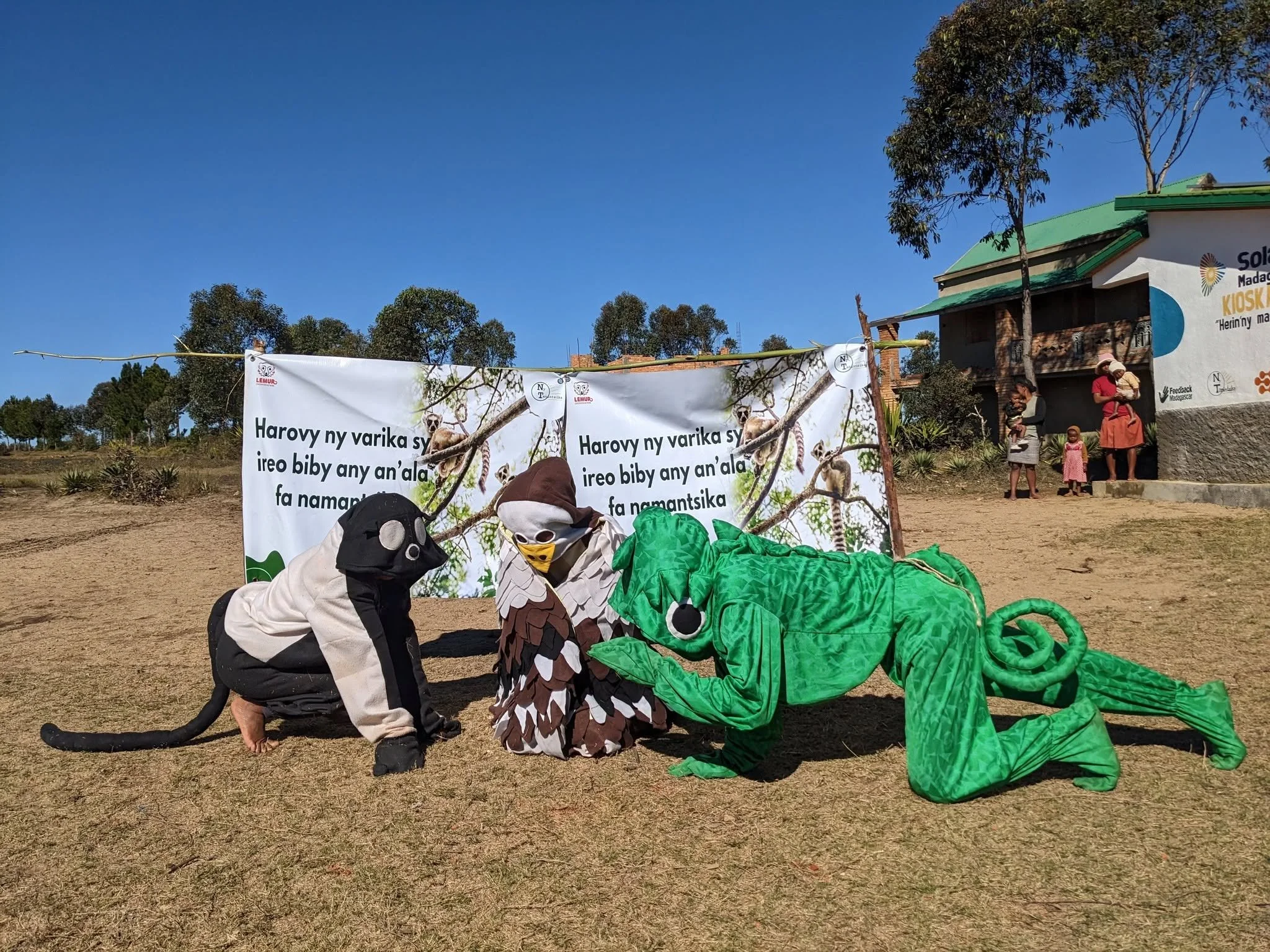
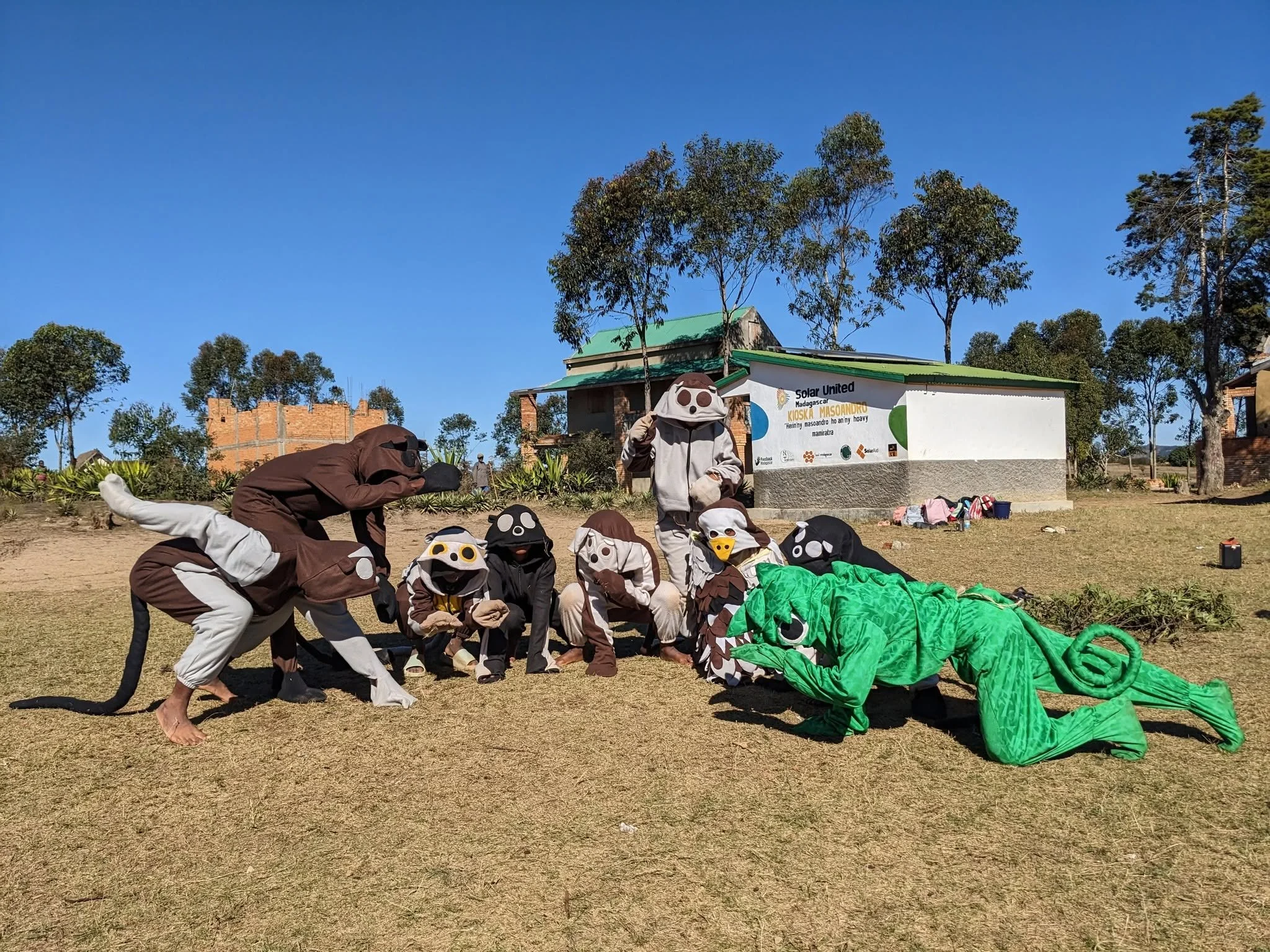
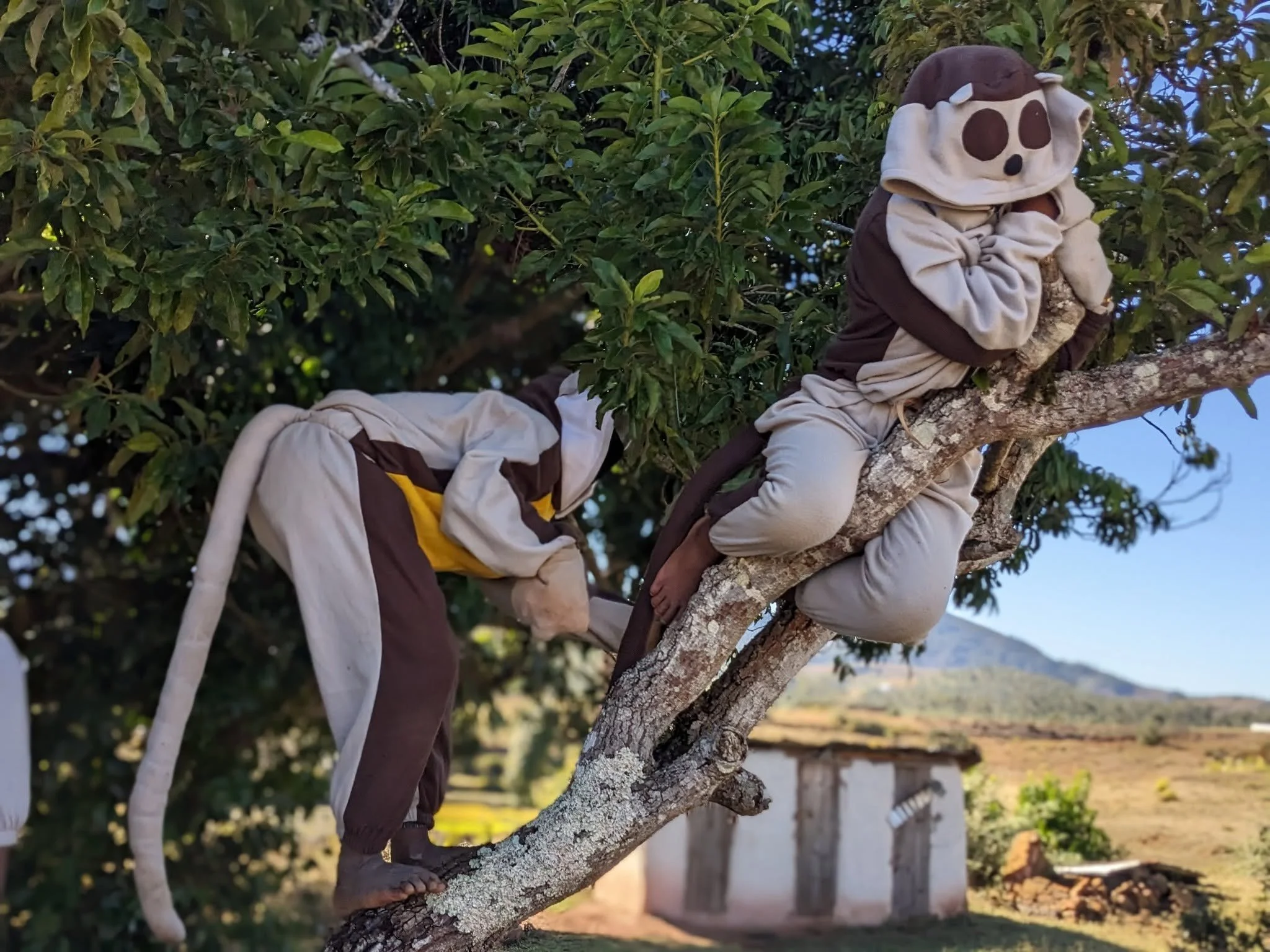
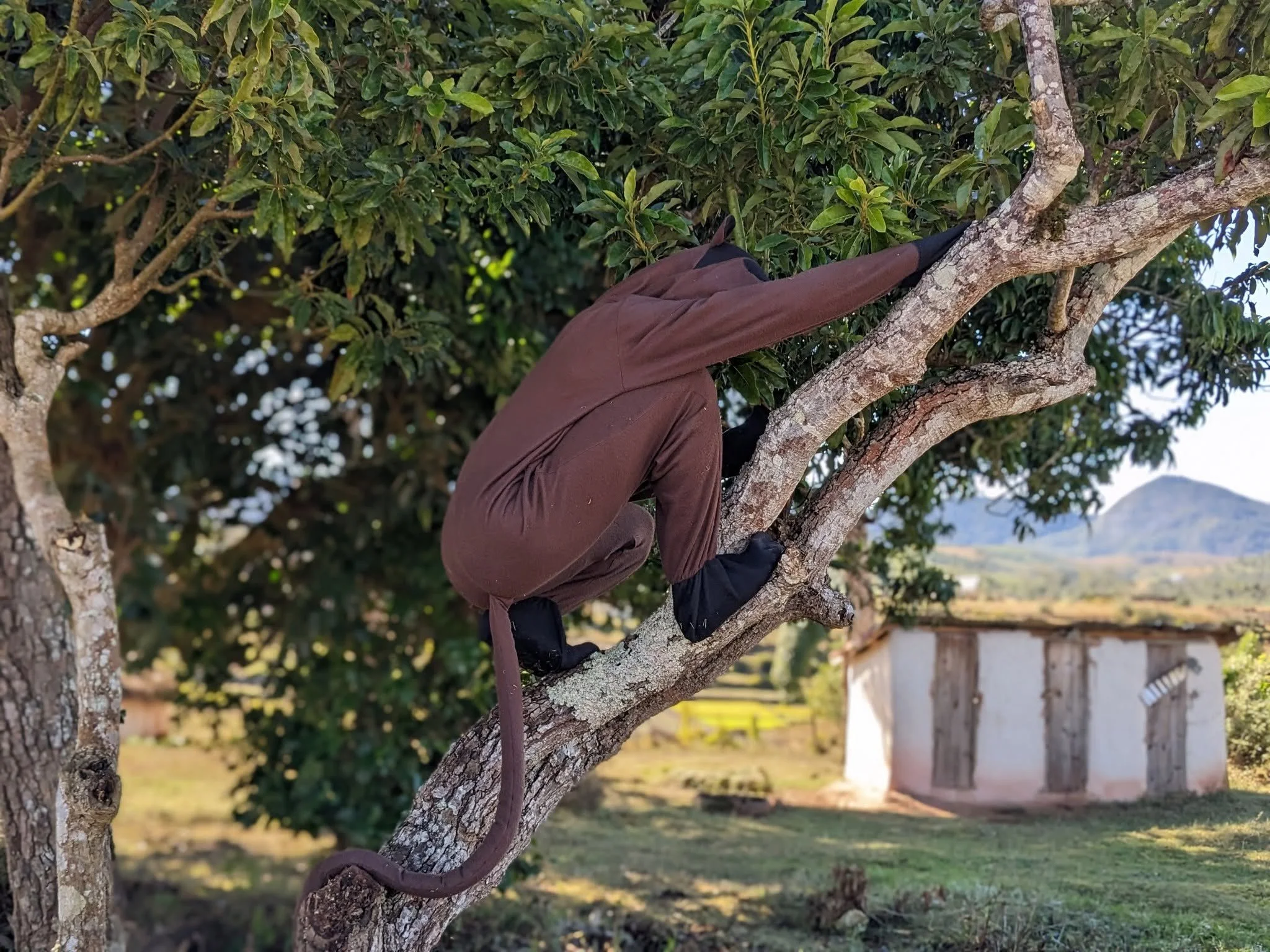
On the road
The first show took place in Lomaka. "We were very nervous," say Safidinirina Samueline Raketsavao (Ketsa), 28, and Andrianambinintsoa Rasolofonomenjanahary (Andry), 20, members of the Youth Centre and the newly established theatre group.
"We didn't expect such a large turnout, but the audience truly showed up. Our families came to watch too. They were very proud." they add.
From there the group went on the road. They gave 17 performances in Ambohimahamasina, 3 in Antodinga and 10 in Ankarimbelo, on both sides of the COFAV rainforest corridor. Travel was long and tedious, the stage was often whatever space a village could offer, and there were never quite enough costumes and props. But the young actors quickly adapted every time.
At several points in the play, the characters would stop and ask the crowd what should happen next, pulling the audience into the story. And after every performance, time was set aside to talk. What happens to us if the forest disappears? Why do lemurs matter? What can we do ourselves? People answered with stories from their own lives and suggested solutions of their own.
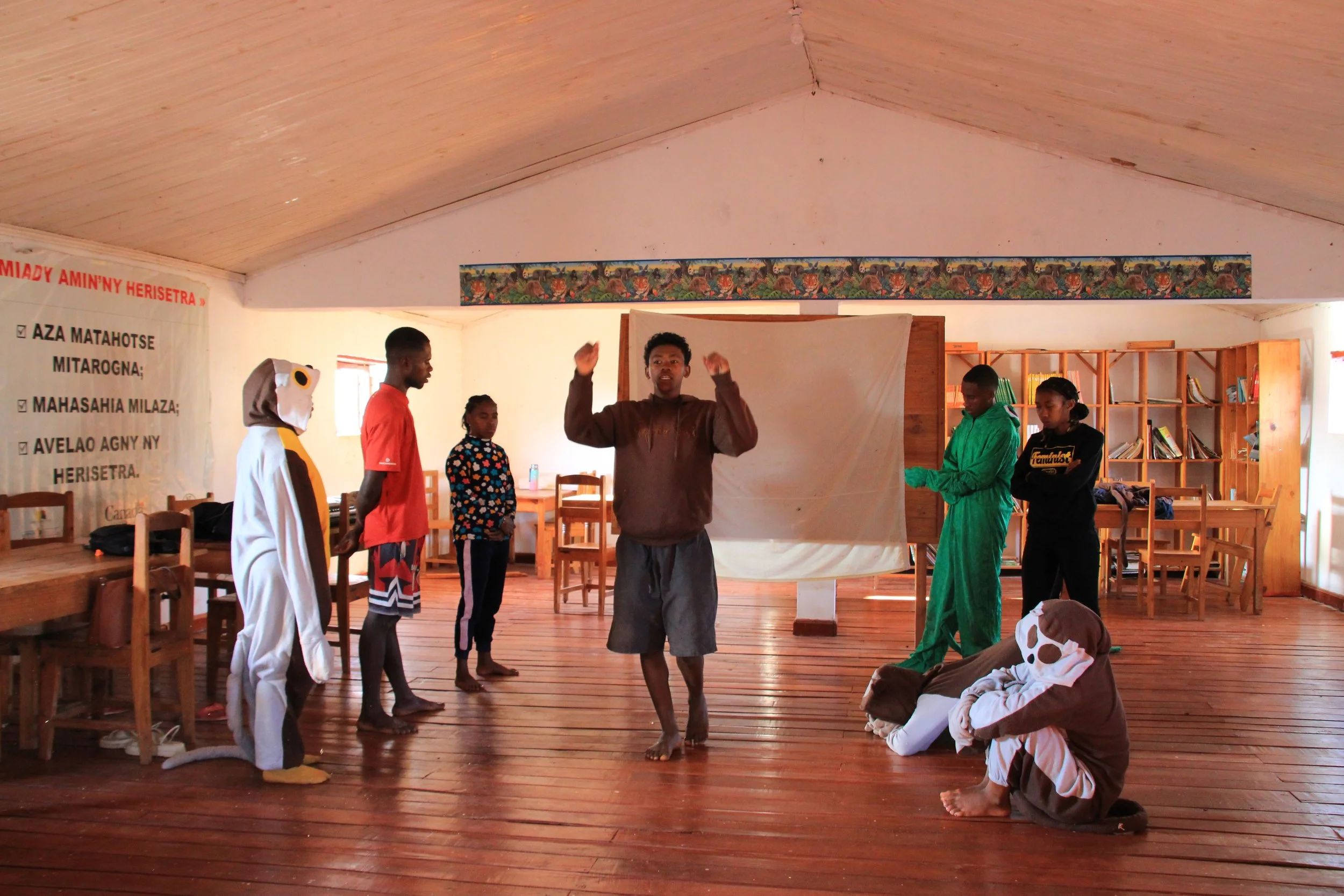
Rehearsals in the Youth Centre (Andry pictured in the middle)
Finding their voices
"The Youth Centre gave us a taste for reading and kept us away from aimless wandering," Ketsa and Andry share. "Before that, we didn't have many activities available to us."
So when the Youth Centre's manager, Liva, mentioned theatre training for young people, they decided to give it a try. The plan was to cast 15 actors. In the end, 22 came to the audition in May (11 girls and 11 boys, aged between 16 and 33).
For nearly four months, they trained with theatre facilitator Madame Anita: breathing, posture, improvisation, learning lines by heart and, above all, finding their voices. "We were often told we weren't speaking loudly enough," they recall. The young actors helped shape the script, adding characters, scenes and dialogue of their own.
The show ends. The theatre group doesn't.
Ask Ketsa and Andry what they have learned, and they will answer like people who have explained it to a village 30 times. "The lemur doesn't destroy trees. By eating fruit, it spreads seeds that grow into new trees. Trees are essential because they bring rain and give us the water we drink."
What they learned about themselves, though, is harder to put in a nutshell. "This experience gave us confidence. Even when things are difficult, we tell ourselves we can do it."
Not everyone who joined the theatre group stayed to the end. Some had dropped out or had jobs that kept them away.
"We were among the first 22 young people to join this project," they say. “In the end, 12 of us performed on the tour. We're proud to have stuck with it."
What started as a single production has since led to the formal founding of FTMTA (Fikambanan’ny Tanora Miombona amin’ny Teatra Ambohimahamasina), the Association of Young People United for Theatre in Ambohimahamasina. The group has elected its own president and vice-president and is already planning new productions.
Now Ketsa’s and Andry’s friends keep asking when the next recruitment will take place.
"We tell them this particular show will end," Ketsa and Andry share, "but the theatre group will continue."
The Youth Theatre for Lemur Conservation project, a Ny Tanintsika and Feedback Madagascar project supported by the Lemur Conservation Network and our TreeMad programme.
